
Sports Facility Card Games Online
Online card games combine card values, hand rankings, betting rounds, and probability to create different forms of gameplay. Sports Facility Card Games can be explored through poker, blackjack, and baccarat, with each game offering its own rules, payout structure, and level of player decision-making. Instead of focusing only on the result of each hand, players should understand dealing procedures, hand strength, and betting limits. Combining probability knowledge with bankroll management can also establish clearer financial boundaries and provide better control over stake size.
How Sports Facility Card Games Work
Each card game uses its own deck, card values, and dealing rules to determine results. Some games focus on creating strong hands, while others involve comparing point totals or choosing betting positions. When exploring Sports Facility Card Games, players should understand hand rankings, betting rounds, and settlement rules to know exactly how a hand begins, how decisions are processed, and how the final result is determined.
Decks, Card Values And The Dealing Process
Many online card games use a standard 52-card deck divided into four suits. Card values work differently between games: poker focuses on combinations, blackjack calculates hand totals, while baccarat uses its own point system.
Hole cards are private cards dealt to individual players, while community cards are shared in certain poker variations. Shuffling and card-dealing procedures also depend on the rules of the game.
When participating in Sports Facility Card Games, players should understand how the deck is used. The number of decks, dealing order, and dealer position can influence game mechanics, although they do not guarantee the result of an individual hand.
Hand Rankings And Determining Results

Hand rankings are particularly important in poker. The common order progresses from High Card, Pair, Two Pair, and Three of a Kind to Straight, Flush, Full House, Four of a Kind, and Straight Flush.
When two players hold the same type of hand, tie-breaking rules determine the winner. Card values or kickers may become deciding factors depending on the combination.
Within Sports Facility Card Games, hand strength must be understood according to the specific rules. Poker uses a defined ranking system, while blackjack and baccarat determine outcomes through card totals rather than poker-style combinations.
Betting Rounds And Player Decisions
Betting rounds are an important part of many card games. In poker, players may Check, Bet, Call, Raise, or Fold depending on previous actions and their position at the table.
Antes and blinds create the initial pot, while bet sizing affects the amount required to continue playing the hand. Table limits establish minimum and maximum betting amounts.
With Sports Facility Card Games, player decisions should be based on the current game state, probability, and bankroll rather than emotion. Each decision can change the level of financial risk associated with the current hand.
Popular Sports Facility Card Games
Poker, blackjack, and baccarat all use playing cards but differ considerably in their mechanics. Poker focuses on hand rankings, betting strategy, and decisions between players; blackjack combines card values with dealer rules; while baccarat mainly revolves around Player, Banker, and Tie. Sports Facility Card Games should therefore be approached according to the rules of each game instead of applying one betting strategy to every type of card game.
Poker With Hand Rankings And Betting Strategy

Texas Hold’em is one of the most widely recognized poker formats. Players receive hole cards and combine them with community cards revealed across the Flop, Turn, and River to create their strongest hand.
Omaha follows a similar structure, but the number of hole cards and the rules for creating the final hand differ from Hold’em. Position is also important because it determines the order of action during betting rounds.
When playing poker within Sports Facility Card Games, pot odds and implied odds can support decision-making. Bluffing is another strategic element, but every decision remains influenced by incomplete information and opponents’ actions.
Blackjack With Card Values And Dealer Rules
Blackjack aims to create a hand total closer to 21 than the dealer without exceeding that number. Depending on the cards and table rules, players may choose Hit, Stand, Double Down, or Split.
Basic strategy uses mathematical probability to identify suitable actions in many situations. However, strategy cannot completely remove the house edge or guarantee that a particular hand will win.
Within Sports Facility Card Games, blackjack rules should be reviewed before playing. Dealer actions on Soft 17, Natural Blackjack payouts, and Double Down conditions can change the mathematical structure of the game.
Baccarat With Player, Banker And Tie
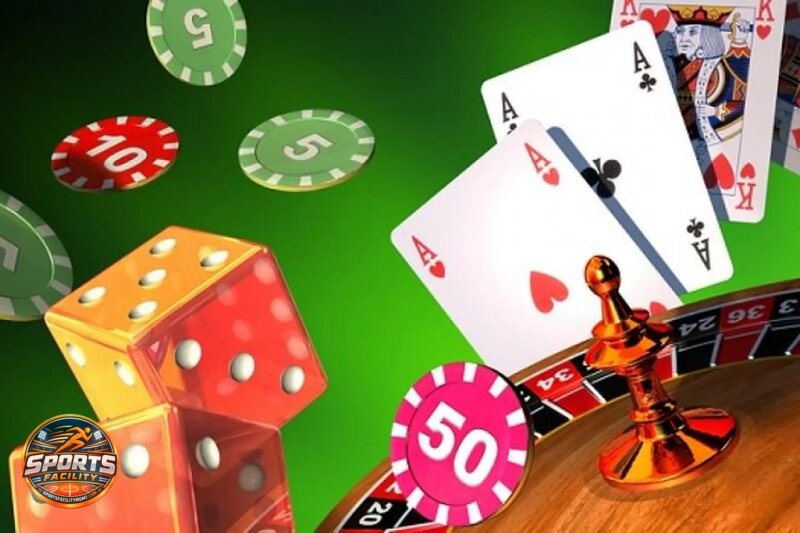
Baccarat focuses on three common betting options: Player, Banker, and Tie. Each hand is calculated according to card values, with the final digit of the total generally determining the hand value.
Third-card rules are usually predetermined, meaning players do not directly choose whether to Hit or Stand as they do in blackjack. Banker bets may also involve a commission depending on the version.
When exploring baccarat through Sports Facility Card Games, players should check the payout ratio and house edge for each betting option. Tie bets may offer higher payouts, but their probability is also significantly different.
A Balanced Approach To Sports Facility Card Games
Card games always involve uncertainty and financial risk, even when probability or strategy can support individual decisions. With Sports Facility Card Games, understanding pot odds, house edge, and payout ratios is more useful than relying on winning streaks. Bankroll, stake size, and session limits should also be established before playing to avoid increasing wagers emotionally or attempting to recover previous losses quickly.
Understand Probability, Pot Odds And House Edge
Card probability helps players evaluate the likelihood of different outcomes. In poker, the number of remaining outs can be used to estimate the drawing probability of receiving the cards needed to improve a hand.
Pot odds compare the cost of calling with the current size of the pot, while implied odds also consider potential value in later betting rounds. Expected value provides another method for evaluating risk versus reward.
Within Sports Facility Card Games, house edge is particularly relevant to casino table games. These concepts can support decision-making but cannot guarantee the result of an individual hand.
Manage Your Bankroll And Stake Size
Bankroll management begins with an entertainment budget kept separate from money required for living expenses or financial obligations. Players can divide the bankroll into betting units to establish an appropriate stake size.
Buy-ins and table stakes should remain suitable for the overall budget. Session budgets, daily limits, and loss limits can also establish clear boundaries before play begins.
When participating in Sports Facility Card Games, chasing losses by increasing stakes after a losing streak can create greater bankroll volatility. Borrowed money should not be used to continue playing or recover previous losses.
Check The Online Card Gaming Platform
An online card gaming platform should be evaluated on more than the number of tables or promotions available. Operator information, licensing where applicable, game providers, and table rules are important details to review.
For digital games, RNG information may explain how results are generated. Live dealer games instead use video streaming and real dealers to operate tables.
Before using Sports Facility Card Games, players should also review security, account verification, payment methods, and withdrawal conditions. Responsible gambling tools such as deposit limits, time limits, or self-exclusion options are also worth considering when available.
Conclusion
Sports Facility Card Games can be understood through three main factors: game mechanics, probability, and bankroll management. Poker uses hand rankings and betting rounds, blackjack combines card values with player decisions, while baccarat operates around Player, Banker, and Tie.
Pot odds, house edge, and expected value can help players understand risk, but they cannot guarantee the result of an individual hand, brought to you by sports facility.
When approaching Sports Facility Card Games, players should understand the rules, check table limits, choose an appropriate stake size, and maintain a clear session budget. A controlled approach is more practical than increasing wagers emotionally or relying on winning streaks to predict future results.